Every Lehigh Valley winter does the same thing to bare concrete. Salt gets tracked in on tires and boots, snowmelt carries it into the pores of the slab, and the freeze-thaw cycle does the rest. By spring, the surface that was smooth in November is chalky, pitted, and dusting. Here's what's actually happening — and why a properly coated floor simply doesn't go through it.
What salt actually does to concrete
Salt itself doesn't eat concrete the way it eats metal. The damage comes from what salt enables. Salted snow melts into a salty brine that soaks deep into concrete's porous surface. When temperatures drop again, that brine freezes and expands inside the slab — and expanding ice is what pops the surface apart.
That's called freeze-thaw spalling. Each cycle chips away a little more, leaving the pitted, crumbling surface and the white salt haze you see on bare garage floors every April. It's not dirt, and it doesn't sweep away — it's the concrete itself breaking down.
Why bare garage floors get hit hardest
Your garage floor is where salt concentration is at its worst. Tires carry in slush from treated roads all winter, it pools along the walls and under the car, and the slab soaks it up. A garage also sits right at the temperature line — warm enough to melt snow during the day, cold enough to refreeze overnight — so it gets more freeze-thaw cycles than almost any other slab on your property.
Add in the fact that most residential garage slabs were poured with minimal finishing and no sealer, and you have the perfect environment for winter damage. It's why so many Lehigh Valley garages look fine new and rough within a few winters.
How a coated floor stops the cycle
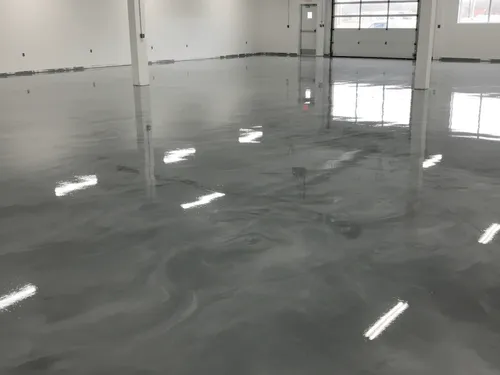
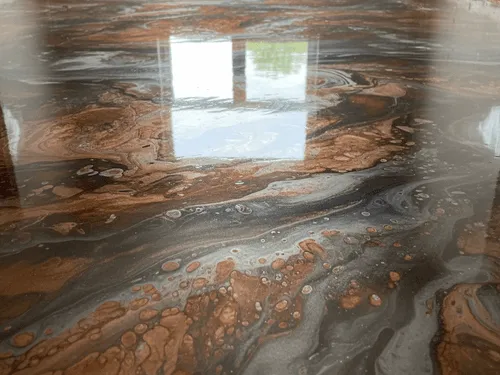
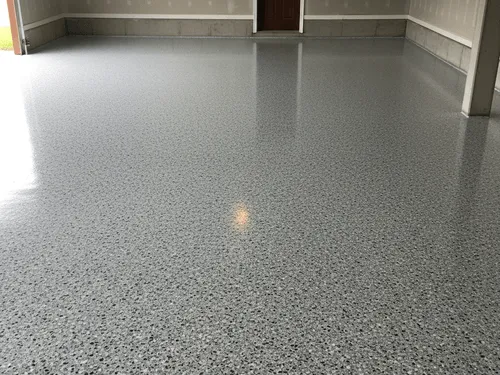
A properly installed epoxy or polyaspartic system works because it closes the surface. Instead of an open, porous slab drinking salty brine, you have a dense, seamless membrane the melt can't penetrate. There's nothing for ice to expand inside, so the freeze-thaw cycle has nothing to grab.
The chemistry matters here: a 100%-solids epoxy base bonds deep into diamond-ground concrete, and a UV-stable polyaspartic topcoat seals the surface against water, salt, and road chemicals. That combination is why coated floors in the same driveway that chews up bare slabs come through winter looking like they did in November.
The cleanup difference is the tell
Ask anyone with a coated floor: winter cleanup changes completely. On bare concrete, salt residue bonds to the rough surface and takes real scrubbing to budge. On a coated floor, slush and salt sit on top of a non-porous surface — a quick squeegee or mop and the floor is clean again in minutes.
One of our recent clients put it best: she can't wait to 'clean away the salt this winter instead of the old concrete.' That's the real-world difference between a floor that absorbs winter and one that sheds it.
The best time to coat is before the damage
Here's the part most homeowners don't realize: coating a pitted floor is a different job than coating a sound one. Spalling concrete needs patching, leveling, and more grinding before the system goes down — which means more cost. A slab that's still in good shape takes the prep, the coating, and the warranty at the standard price.
If your garage floor is still smooth, this is the cheapest winter it will ever be to protect. If the pitting has already started, the floor can absolutely still be restored — it just takes the patch-and-level work first. Either way, the fix is the same: close the surface, and winter stops mattering.
Want this kind of floor in your space? We install across the Lehigh Valley with a 10-year warranty and free estimates — usually back to you within one business day.